Skaler Review: AI Ad Engine for Competitor Research & Creation
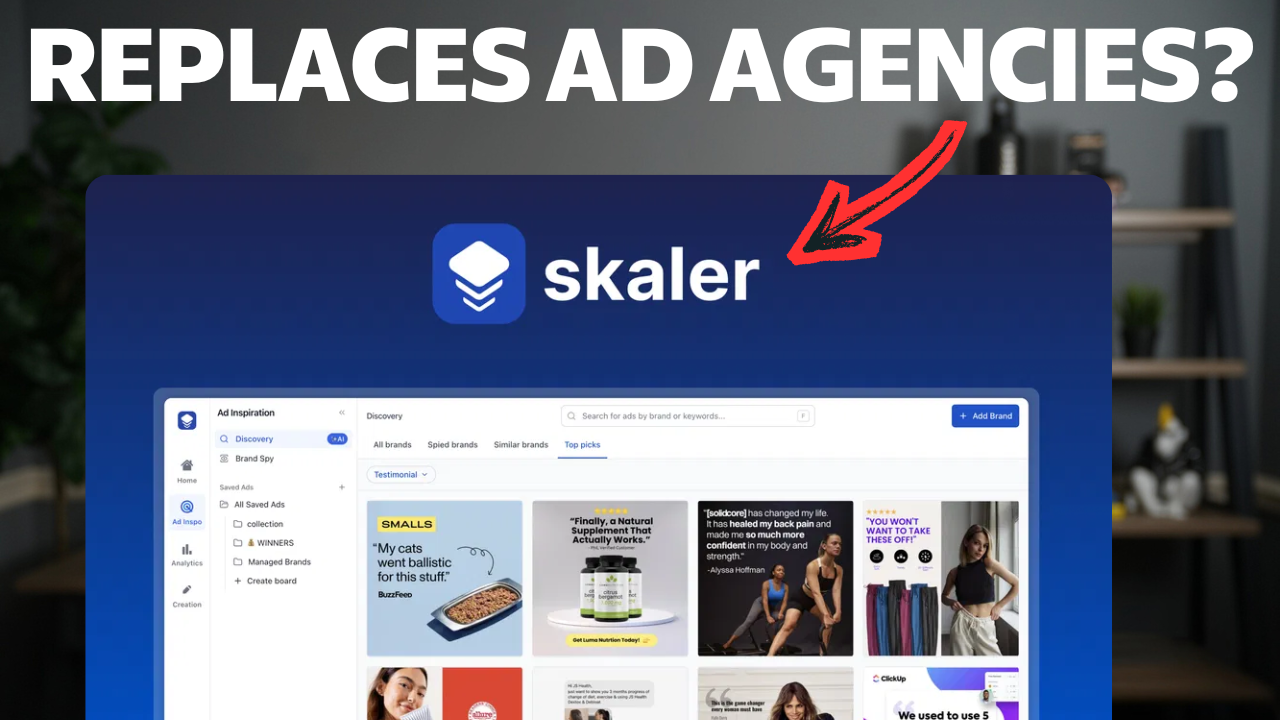
Skaler is an all-in-one AI ad engine available on AppSumo that combines competitor ad research, AI-powered ad creation and cloning, video ads, and Meta analytics. I tested every feature to see if it can replace your ad agency.


Printful is a print-on-demand service that eliminates upfront inventory costs. Create your design, choose from 400+ products, connect your store (Etsy, Shopify, etc.), and Printful handles production and shipping when customers order. They print locally in the US and Europe for faster delivery.
Skaler
All-in-one AI ad engine for competitor research, ad creation, cloning, and Meta analytics
E-commerce agencies, media buyers, and founders running Meta ads
Meta Business Manager, Ad Alchemy, Growify
What Is Skaler?
Skaler is an AI-powered ad platform that bundles competitor research, ad creation, and analytics into a single tool. It's currently available on AppSumo as part of AI Week, starting at $69.
The pitch is straightforward: instead of juggling multiple tools for ad research, creative generation, and performance tracking, Skaler puts it all under one roof. You can spy on what your competitors are running on Meta, clone their best-performing ads for your brand, generate new creatives with AI, and track your own ad performance.
One important caveat upfront — the AI credits you get with your AppSumo purchase are one-time credits, not renewing. You get platform access permanently, but you'll need to reload credits as you use them. Given how AI costs work right now, this is actually a reasonable approach.
The Three Core Tools
Skaler's dashboard is built around three main sections that work together: Ad Inspiration, Ad Creation, and Analytics. The idea is you start with research, move into creation, and then track performance — a complete workflow.
The interface itself is clean and fast-loading. If you've ever struggled with Meta's Business Manager (and who hasn't), you'll appreciate how much more approachable Skaler's layout feels. Everything is clearly organized and accessible without five clicks through nested menus.
Ad Inspiration & Discovery

The Ad Inspiration section is where you start your research. It shows top-performing ads across Meta, broken down by category. You can browse fashion, wellness, finance — basically whatever niche you're targeting — and see what's working right now.
There's also a Top Picks section that surfaces the highest-performing ads in specific categories like before-and-after ads, UGC-style content, and more. For anyone getting into Meta advertising, this is genuinely useful for understanding what types of creatives perform well.
You can save any ad you find to boards — think of it like Pinterest for ad inspiration. Create boards for different campaigns or products and build a swipe file of ideas you want to reference later.
Brand Spy: Watching Your Competitors

The Brand Spy feature is where things get interesting. You can add specific brands to track and see everything they're doing with their Meta advertising — how many ads they're running, which ones are active, estimated ad spend, landing pages, top-performing hooks, and the creative elements they use most.
I tested it with AppSumo's ads and the data was detailed: 287 ads total, 153 active, 61% image-based, roughly $53K in estimated spend. You can see their landing pages, hook styles, and creative elements at a glance. The platform also shows their top-performing individual ads.
Skaler links directly to Meta's ad library too, so if you want to verify anything or go deeper, you're one click away. There's also a Chrome extension that lets you save ads directly to your Skaler account while browsing social media — handy for those moments when you spot a great ad in the wild.
The Discovery Depth Problem
Here's where I hit the biggest limitation. The discovery section doesn't go nearly deep enough. When I searched for guitar brands like Fender — a company that absolutely runs Meta ads — Skaler couldn't find them. I had to manually add Fender as a spied brand using their ad library URL, and that takes up to an hour to populate and uses your limited brand spy credits.
I tried searching for other brands too: Cybertruck accessories, well-known internet marketers like Frank Kern — and came up mostly empty. The pre-indexed library seems to lean heavily toward mainstream consumer brands and e-commerce.
If the Skaler team is reading this: expanding that discovery database to cover more of the Meta ad library would dramatically increase the tool's value. Right now, you may end up burning spy credits just to access brands that should already be indexed.
AI Ad Creation: Images, Cloning, and Video
Ad creation in Skaler starts with adding your product. Paste a URL and the platform scrapes product information, marketing copy, and attempts to pull images. In my testing with an EVH guitar, it grabbed all the text but missed the images — I had to upload those manually.
From there, you have three options for image ads: create from a concept (describe what you want), clone an existing ad, or build from a template. The concept generation impressed me — I prompted it to create an ad about bringing rock history to a guitar collection, and the four generated ads looked genuinely professional. Clean layouts, good typography, compelling copy.
The clone feature is the standout. You pick any competitor's ad, choose between a word-for-word copy or creative rebuild, and Skaler regenerates it with your product's branding and messaging. I cloned a skincare ad for a guitar — obviously mismatched — but the creative rebuild intelligently adapted the copy and structure. With a properly matched niche, this would be seriously effective.
Video Ads and Hook Generation
Skaler also handles video ad creation with options for cloning video ads, generating UGC-style videos, or converting static images to video. The models available include Veo3 (20 credits) and Kling 720p (5 credits).
I tested the static-to-video conversion with one of my generated guitar ads, and the result was surprisingly good. It cleanly faded out the text overlays and created a smooth animation. The main limitation is length — the generated clips are only about 5 seconds, so you'd need to chain multiple together for a full ad.
The hook generator is more straightforward: feed it your product and optional context, and it produces ad hooks. The ones I got were decent — things like "Do not pick up this 5150 if you hate endless sustain" — but nothing you couldn't get from any LLM. The value is having it integrated directly into the ad creation workflow.
Analytics Dashboard
Connect your Meta ad account and Skaler surfaces ROAS, purchases, spend, CPM, audience demographics (age, gender, country, device), and platform breakdowns. You get three views for your ads: Scaling (ads ready to ramp up), Opportunities (potential niches), and Fatiguing (ads on the decline).
You can filter reports by creatives, videos, or images, and create custom reports for whatever metrics matter to your business. It's a cleaner interface than Meta's native tools, though you obviously won't get the same depth as Business Manager for complex multi-campaign setups.
Pricing and Plans
All three tiers include every feature — the difference is credit and limit allocations. Tier 1 ($69) gives you 450 AI credits for ad generation but no brand spy or creative analytics accounts. Tier 2 (their recommended plan) adds brand spy accounts and creative analytics. Tier 3 bumps everything higher, including 150 brand spy accounts.
Remember: these are one-time AI credits. Once you burn through them, you'll need to buy more. For the ad creation features, that's expected — AI compute isn't free. The brand spy and analytics access is the real lasting value of the purchase.
If you're primarily interested in ad research and occasional creative generation, Tier 2 is the sweet spot. If you only want to test the AI generation features, Tier 1 lets you experiment at the lowest cost.
Final Verdict
Skaler does a lot of things right. The ad creation is the best I've seen from an AppSumo tool in this category — the image generation is polished, the cloning feature is genuinely useful, and the video ad conversion works better than expected. The analytics dashboard is a cleaner alternative to Meta's native tools.
Where it falls short is the discovery section. The pre-indexed brand library is too shallow, meaning you'll often need to manually add brands and wait for data to populate. For a tool that positions competitor research as a core feature, that needs significant expansion.
I'm giving Skaler a 7.7 out of 10. It's a solid platform with a strong ad creation engine, but the limited discovery database holds it back from being a true all-in-one solution. If the team deepens that ad library, this score goes up considerably.
Frequently Asked Questions
What is Skaler and what does it do?
Skaler is an AI-powered ad platform that combines competitor ad research (spy on brands running Meta ads), AI ad creation (generate image and video ads from prompts or by cloning competitor creatives), and analytics (track ROAS, spend, audience data) in a single tool.
Is Skaler a true lifetime deal?
Partially. You get permanent access to the platform and features, but the AI credits for generating ads are one-time — not renewing. Once you use your credits, you'll need to purchase more. The brand spy access and analytics features are included permanently.
How much does Skaler cost on AppSumo?
Skaler starts at $69 for Tier 1 (450 AI credits, no brand spy). Tier 2 adds brand spy accounts and creative analytics, and Tier 3 provides the highest limits across all features. During AppSumo AI Week, pricing may be at its lowest.
Can Skaler create video ads?
Yes. Skaler offers video ad creation including video cloning, UGC-style video generation, and static-to-video conversion. Models available include Veo3 and Kling 720p. Generated clips are short (around 5 seconds) so you may need to chain them together.
What ad platforms does Skaler support?
Skaler currently focuses on Meta (Facebook/Instagram) ads. The discovery and brand spy features pull from the Meta ad library, and the analytics connect to your Meta ad account. Support for TikTok and LinkedIn ad libraries is available for browsing saved ads.
How does the ad cloning feature work?
Find any competitor ad in Skaler's library or through brand spy, click clone, and choose between word-for-word or creative rebuild. Skaler strips the original text, analyzes the structure, and regenerates it with your brand's product info, messaging, and images.
Is Skaler worth it for small businesses?
If you're running Meta ads and want to reduce your reliance on expensive agencies or freelancers, Skaler offers good value — especially the ad cloning and generation features. The main limitation is the shallow discovery database, so you may need to manually track competitor brands.
Get Dave's Toolbox
The tools I actually use, every Tuesday. Free. No spam.
No cost. No spam. Unsubscribe anytime.